
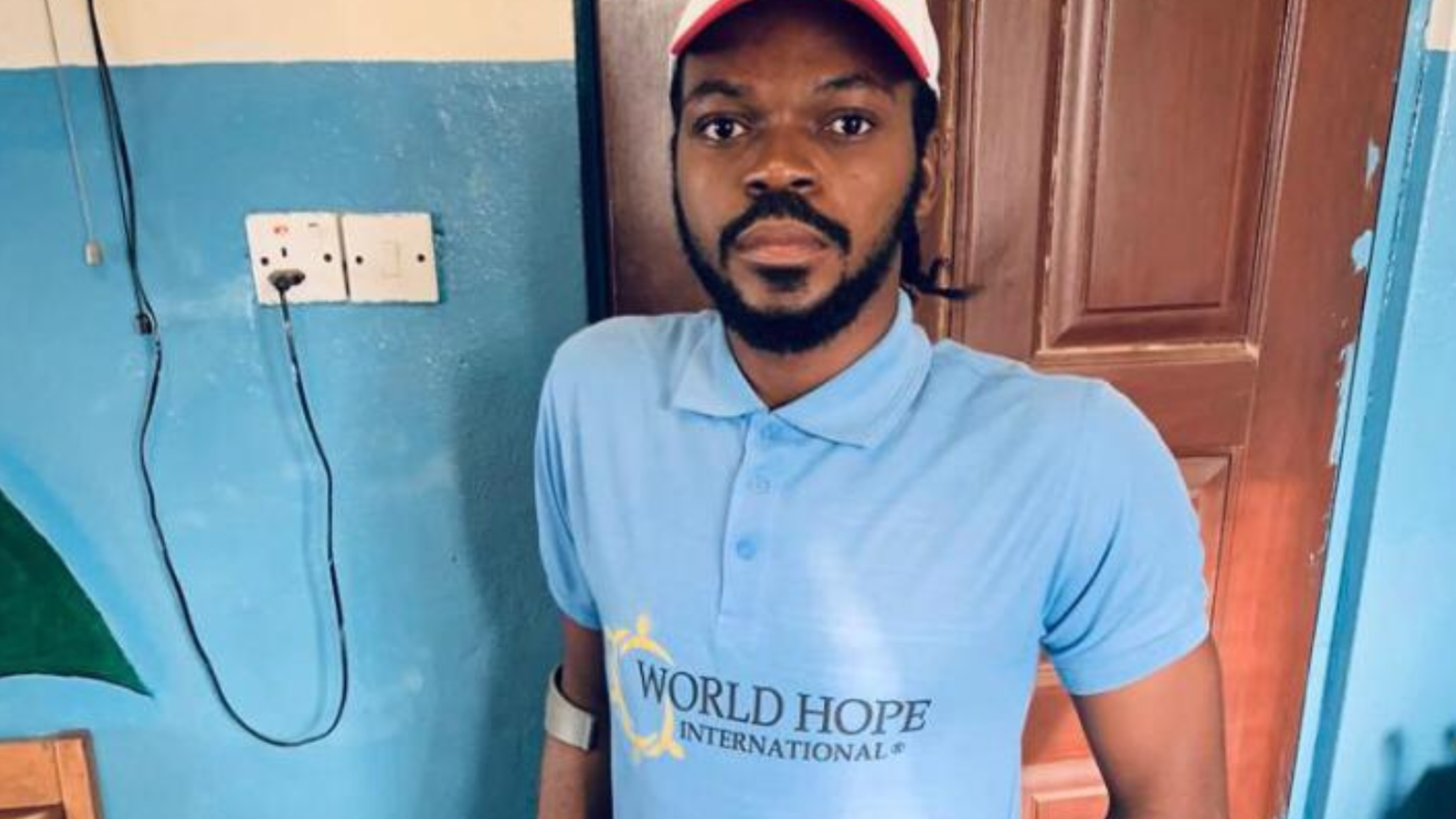
Sorie Bangura, an administrator for the Enable the Children (ETC) Program in Sierra Leone, understands what it is to live with a disability in his home country. Sierra Leone is largely a superstitious society causing every unfortunate situation to be spiritualized; including his disability.
His slender legs and inability to walk caused those in his community to avoid him and his mom. Nobody came close. The community that surrounded them thought he was a devil who needed to go back to wherever he came from. As a small boy, Sorie remembers the discrimination, stigma, and marginalization he and his mother endured because of how he looked.
In time, he moved to Freetown and stayed in a boarding house for children living with disabilities. Everything changed for Sorie in 2007 when he connected with ETC. He was diagnosed with poliomyelitis; a highly infectious viral disease which can be transmitted through contaminated water. Once in the body, this virus multiplies and invades the nervous system causing paralysis.
The. ETC team began working with Sorie. Through physiotherapy interventions, feeling in his legs began to return enough that he could stand and move around, enabling him to go to school. He completed high school and went on to graduate university with a degree in Sociology.
In his work with ETC, Sorie goes to communities to visit children in the program and their families, reminding them that there is hope in hard places. His own story of transformation is igniting hope in children living with disabilities and their families. He is a living testimony to the transformative work Enable the Children is doing.
'For I know the plans I have for you... plans... to give you a future and a hope.'
Jeremiah 29:11 | NLT

World Hope International (Canada) is a registered charity.
Charitable #869500173 RR 0001
1830 Mountain Road, Suite C
Moncton NB E1G 1A9
+1-613-482-1499
Toll-Free: 877-482-1499
info@worldhope.ca

World Hope International (Canada) funds are confined to Board-approved projects. Funds designated towards a project are used as designated, with the understanding that when the need for that project has been met or cannot be completed for reasons determined by the Board, the remaining funds designated will be used where needed most.