
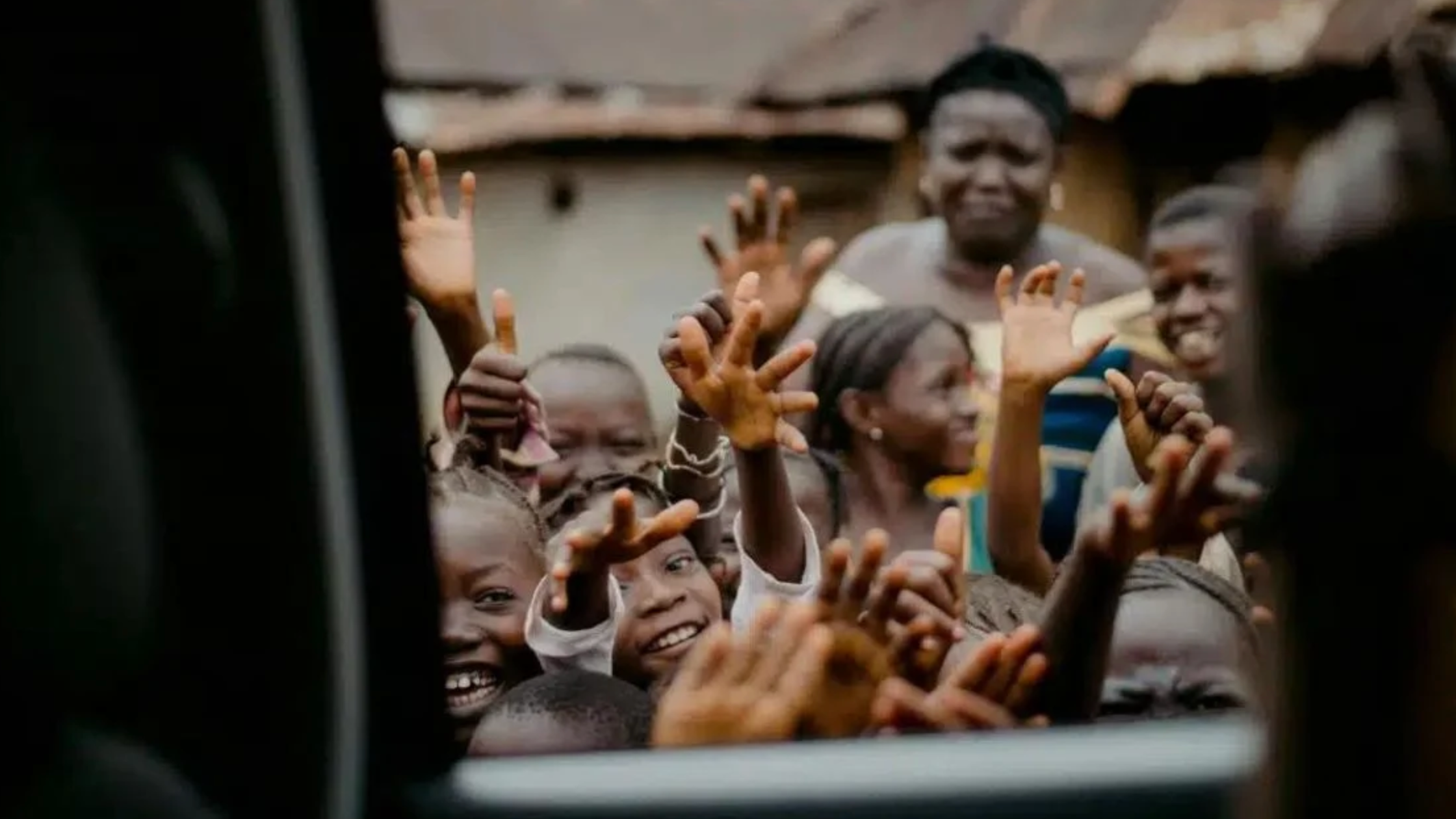
Children all around the world need protection and nurturing to survive and thrive. For those whose families experience poverty, children are most adversely affected. According to the World Bank (September 2023), children make up about 31% of the global population, but they comprise more than half of those living in extreme poverty.* What does extreme poverty mean? (If you haven’t yet read our Learning Lesson, “What Is Poverty?” you can read it here.)
What does extreme poverty mean? Let’s talk numbers for a moment to get a handle on this – if we can. These stats come from the World Bank and were updated in 2022. On a global scale, approximately 333 million children survive on less than $2.95 CAD a day that’s less than $92 per month, 829 million children subsist below a poverty line of $4.98 CAD a day, that’s less than $155 a month, and 1.43 billion children are living on less than $9.35 CAD a day that’s less than $290 per month. Just think about this – $2.95 CAD won’t even buy you a good cup of coffee, let alone water, food, clothes, a roof over your head, education, and medical care.
When there is not enough to go around, families must make the difficult choice about who is going to eat. In homes where one person has a job – no matter how little it pays – the family must sacrifice their own needs to feed the one who provides an income. This is just one reason why so many children are affected by poverty. When children are not getting enough proper food, their bodies lack the necessary nutrients needed to grow, which results in stunting. Ronald J. Sider in his book, Rich Christians in an Age of Hunger, sums up the gut-wrenching plight of poverty, “World poverty is a hundred million mothers weeping because they cannot feed their children.”
Stunting means that the child is too short for his or her age but more than their physical appearance, stunted children can also experience developmental delays. Eighty percent of brain development happens between conception and age 2. A lack of vital nutrients during this time means children may suffer irreversible brain damage. Protein intake is vital to proper growth: both in the body and in brain function. The availability of nutritious protein sources at affordable prices is lacking in many Majority World countries and, for a variety of reasons, other vital nutrients are missing from children’s diets.
Disease is another way that poverty affects children. Many diseases, all but eradicated in the Western World, are unmercifully killing children in the Majority World every day. Measles, tuberculosis, diarrhea: just to name a few, are all preventable and treatable diseases killing children because there is either no money to pay for medication or the medicines are not available. Clinics or doctors are often not accessible in the areas where impoverished people live. Where there is no money, resources are lacking. Poverty perpetuates poverty.
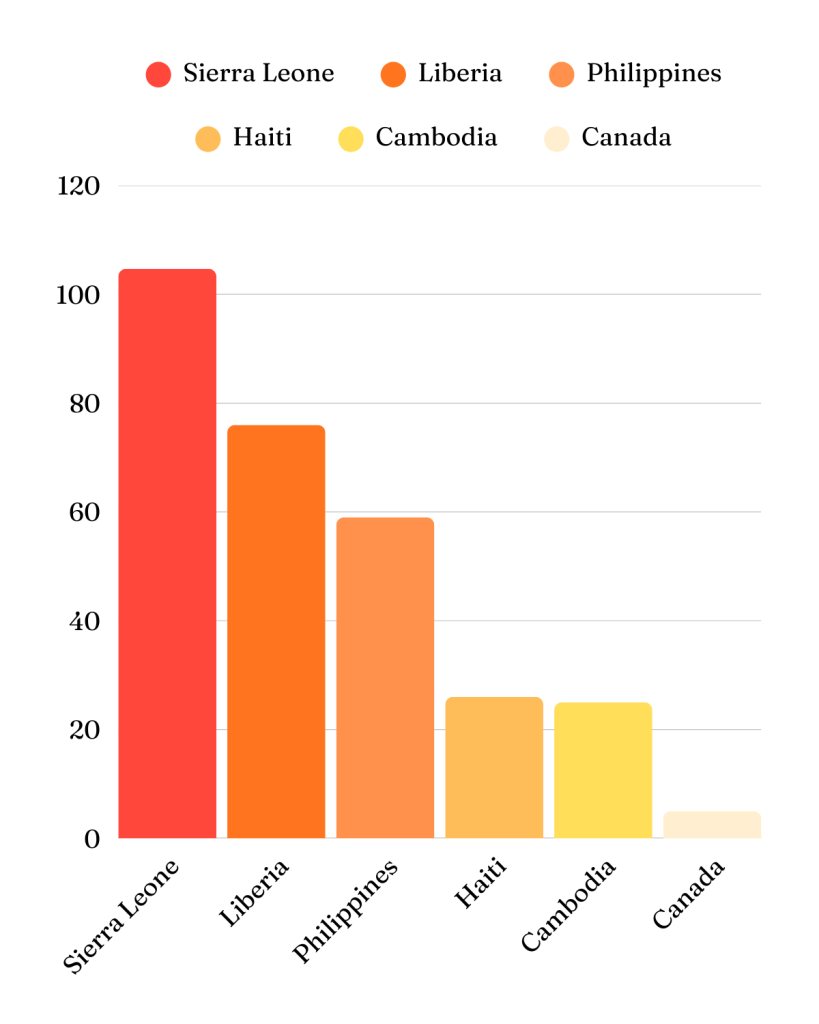
In 2021, about 13,800 children under 5 died every day, an intolerably large number of mainly preventable deaths. Lack of access to clean water, lack of nutritious foods, and a lack of childhood vaccinations are all causes of this great injustice. These numbers are of children under 5 who die out of 1,000 births –
Sierra Leone = 104.7, Liberia = 76, Haiti = 58.6, Philippines 25.7, Cambodia 24.8, compared to Canada = 5
Another factor affecting children living in poverty is access to education. Illiteracy keeps children from breaking the cycle of poverty and keeps them stuck in a cycle of hopelessness. Literacy opens the mind. It opens doors to opportunity, and allows children to dream of greater things not only for themselves, but also for others. Even if a school is accessible for a child, often because of a lack of infrastructure: safe water in the community, latrines, even light; children face obstacles to getting an education.
To break the cycle of poverty, children need the opportunity for education. If the child is not given hope for a future, they will not even know that anything different is possible. The hopelessness they feel will continue, and the cycle of poverty will keep them stuck. Education opens doors that were bolted shut. It opens the eyes, heart, and mind to hope and dream about things they didn’t know existed.
In countries that lack access to clean water, feeding families can seem like an impossible task. Growing healthy crops and raising healthy animals is difficult when clean water isn’t present. When you have to spend all of your time and energy carrying dirty water, you have little energy to work or go to school. Many people living in communities that do not have nearby access to water are walking multiple kilometers each day carrying water that will make them and their families sick.
But when the clean water comes, opportunity, and hope grow. Seed kits and agricultural training give families the opportunity to grow nutritious food giving children the chance for healthier outcomes. When the clean water comes, children have time to go to school and learn so they can work jobs that will give them an income empowering them to break free from the cycle of poverty.
Access to clean water means that children aren’t dying from waterborne disease; babies have a chance to grow and thrive. Access to water and sanitation training means that kids and their families are learning to brush their teeth, wash their hands, and build latrines that do not contaminate their wells. They learn how to keep their water safe from collection to consumption and the importance of hanging their laundry to keep it clean rather than laying it on the ground to dry. They learn good sanitation and hygiene practices to keep them safe.
Children need care and protection, opportunities to grow in healthy ways, opportunities to attend school, and dream about their futures. Windell is a young adult from the Philippines. He is now a college student who recently graduated with honours from high school.
Windell writes, “Growing up in poverty in my school days was a constant struggle. My family struggled to make ends meet and basic necessities like food, clothing, and shelter were often hard to come by. Going to school was a challenge, as I often lacked resources that other students took for granted.
Despite these challenges, I was determined to go on. I worked hard to keep up with my studies, often staying up late to complete my assignments and to study. I asked for help from my teachers and visited the library often.
School became a refuge, a place where I could forget my struggles, focus on my dreams, and I found solace in friendships. I am grateful for the support of my teachers who saw my potential and encouraged me to pursue my goals.
Looking back, my school days were a time of hardship, but also a time of resilience and determination. I learned the value of hard work, perseverance, and the importance of education in breaking the cycle of poverty. Though the journey was tough, it shaped me into who I am today.
I thank God above all because He is good all the time. I also thank World Hope programs which supported me throughout my educational journey. I have dreams and hopes for my future thanks to the education and encouragement I have received. Now, I am in college taking a bachelor’s degree in agriculture. To God be the glory.”
Poverty affects children on so many levels. But there is hope because breaking the cycle of poverty is possible. Windell’s story is just one example of that. Children are resilient but need the love and support of others to thrive. Jesus teaches about being a good friend in the story of The Good Samaritan (Luke 10:25-37). He is calling His followers to be a friend to the vulnerable, to the poor, to the lowly, and despised. Whether you live next door, or half a world away, you can make a difference in a child’s life which in turn has the potential to impact a family, a community, a nation. You can be a part of bringing hope in hard places.
A friend loves at all times
Proverbs 17:17a | NIV

World Hope International (Canada) is a registered charity.
Charitable #869500173 RR 0001
1830 Mountain Road, Suite C
Moncton NB E1G 1A9
+1-613-482-1499
Toll-Free: 877-482-1499
info@worldhope.ca

World Hope International (Canada) funds are confined to Board-approved projects. Funds designated towards a project are used as designated, with the understanding that when the need for that project has been met or cannot be completed for reasons determined by the Board, the remaining funds designated will be used where needed most.